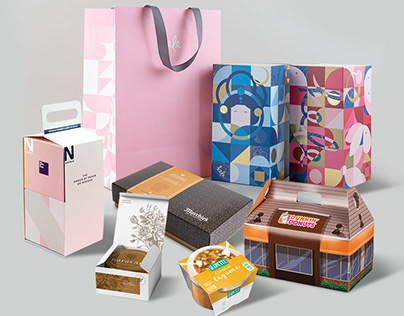
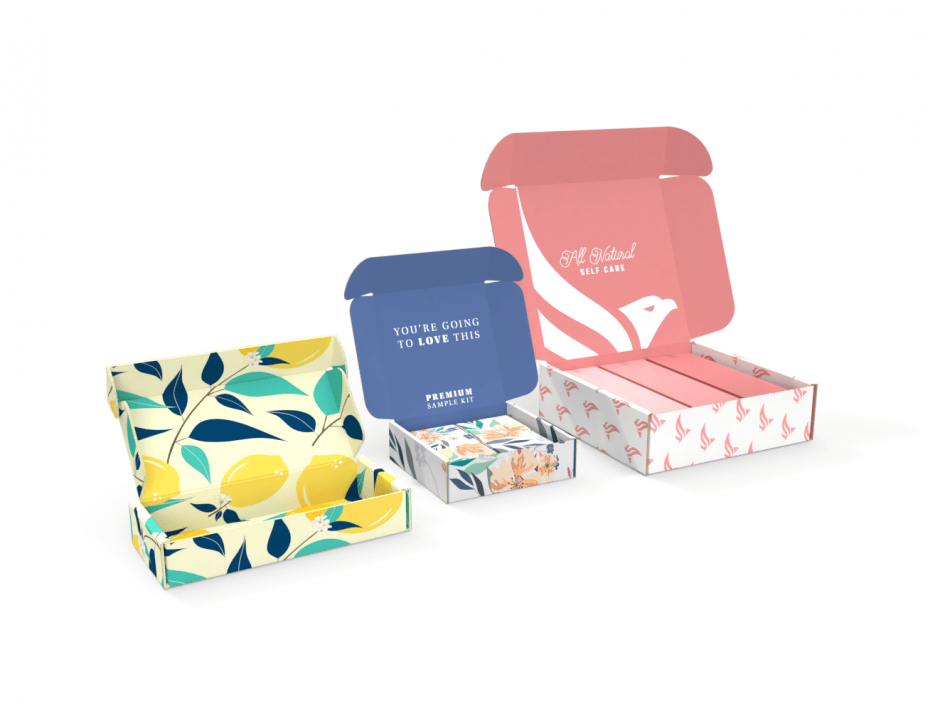
Custom boxes are the new hip thing. You’re not buying cheap old pain cardboard boxes, but these days, you’re getting attractive packaging that helps you make the best first impression towards customers.In summary, packaging boxes that are custom basically hit the criteria that the company so needs, making customers happy and excited with the graphics, new product safety and other strategies, and also building the brand loyalty that’s there. you may need to get them in certain shapes and styles, which might determine the type of customization that’s offered.
How they’re made
Custom boxes usually come out of two different paper types. First, you’ve got the paperboard, which is basically virgin fiber grade types of white packaging. It’s usually available either coated or not coated. It’s light, flat, and easy to print. It’s easy to fold, cut, emboss, and also foil stamp, and it’s great for the retail and pharmaceutical packaging, and also other fancy packaging.
The second type is corrugated paperboard, where it’s got fluted paper within the middle, creating a cushioning sort of means for you to protect the product. These tend to offer better product protection, and you can either go single or double-walled with the way you put them together.
The Graphics and Design Aspects
Then, you need to look at the designing, and the graphics aspects of this. They pretty much are what you need before you can even begin to manufacture everything. You have to know what you want, and with the packaging vendor, you’ll usually be able to get a custom design in place so that customers can have the ultimate design that’s there, based on sizes, colors, and even graphics too!
The designers usually recommend that you go bolder and thicker with the printing, offering more details, and it also is good for serif fonts so that they’re not lost.
The printing process.
Then there is the printing stage, where you may have to use different techniques in order to create different boxes that are better for your needs.You’ve got three different types: flexographic, litho, and digital types of printing, and these are chosen based on the needs of the business. Flexo printing is the most common, as it usually involves putting plates on a cylinder that rotates, and then the artwork gets printed on there.
This is ideal if you’re going to be using printing that’s from edge to edge, text based, and also flood coating. It’s not good for graphics which are complex, or offer a bunch of different colors, as they can get a bit expensive. They do have the little minimum dot, so they seem larger in some cases, and it can make this look a bit limited. Litho lamination, or lithographic printing, is basically printed onto corrugated paperboard, and then, it’s laminated, and from there cut.
This is the technique that you use for high-res graphics, and other options. Finally, you’ve got digital printing which eliminates needing proofs for colors, films, stripping, or even creating prints. It’s good for smaller printing runs, and usually, it’s put directly onto the packaging itself.The biggest thing is that it’s not very affordable for larger orders, and it doesn’t scale properly
After you’ve printed it, you can then ship these to customers. There are tons of different ways to coordinate all of these together, and unique types of packaging elements, and you’ll be able to, with this, create the ideal situation, and the best type of experience for your own personal needs and you can make a packaging that works for you as well.
 Cardboard Boxes Business