Shipping charges are determined by the contents (and sometimes) dimensions and overall weight of the package, not just the items included within. Inaccurate measurements of either the size or weight of the package, whether due to careless measurement or inaccurate scales, can result in additional expense. Properly measuring your order ensures that the appropriate shipping materials are used and that you meet your budget requirements.
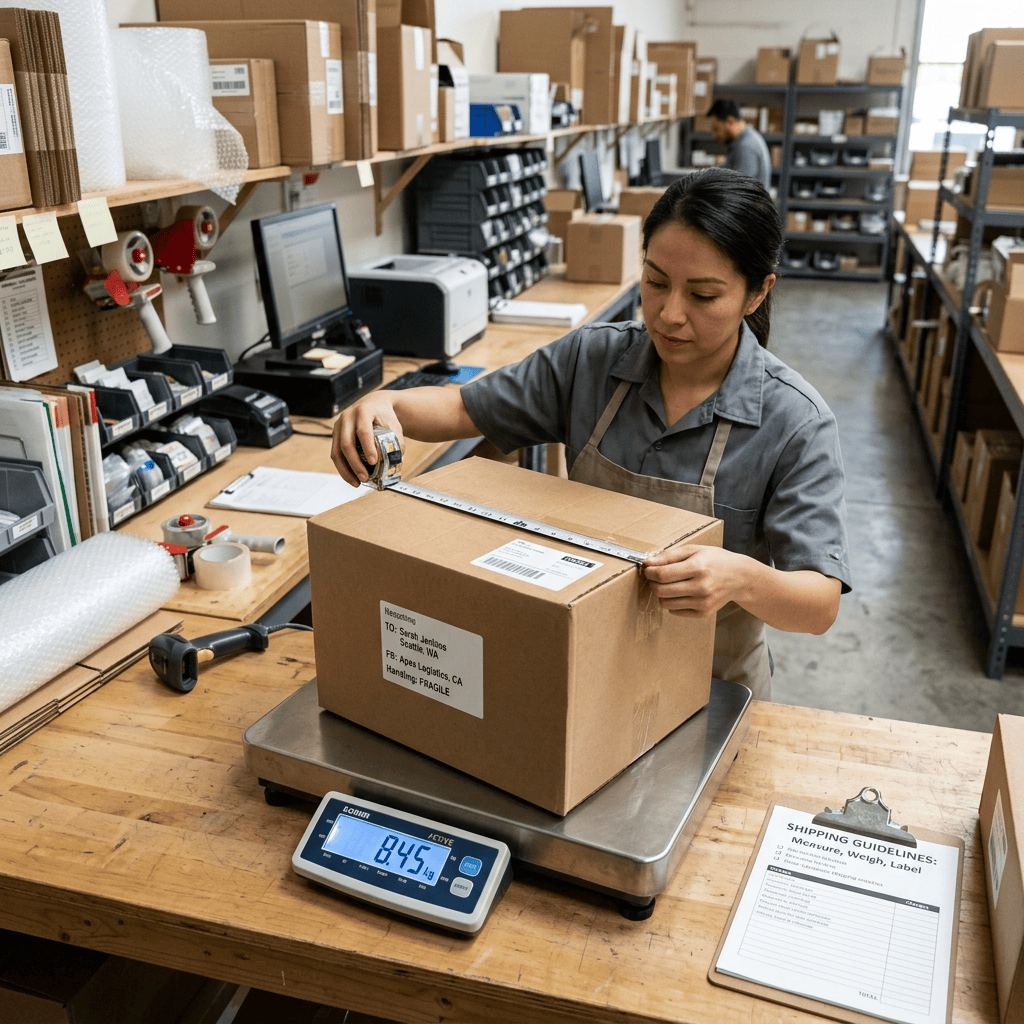
Take all measurements once the order is packed. Due to content, a box may be larger than it was when empty; similarly, a mailer may have grown thicker with content added. Measure the finished packaging as it will arrive to the destination. Taking this measurement will provide a truer representation of how much room your shipment takes up.
Measure the longest dimension to determine the length. Next, find the widest and tallest dimensions. Be certain to measure to the farthest point of any protruding feature. Record the measurements in the same sequence each time to ensure they do not get entered into the incorrect fields.
Do not compress a soft package to appear smaller. Although some compression may occur upon filling, the mailer typically returns to its original form once released. Take the measurements when resting on the surface of the worktable. If your package is irregularly shaped, record the three largest dimensions (length, width, and height).
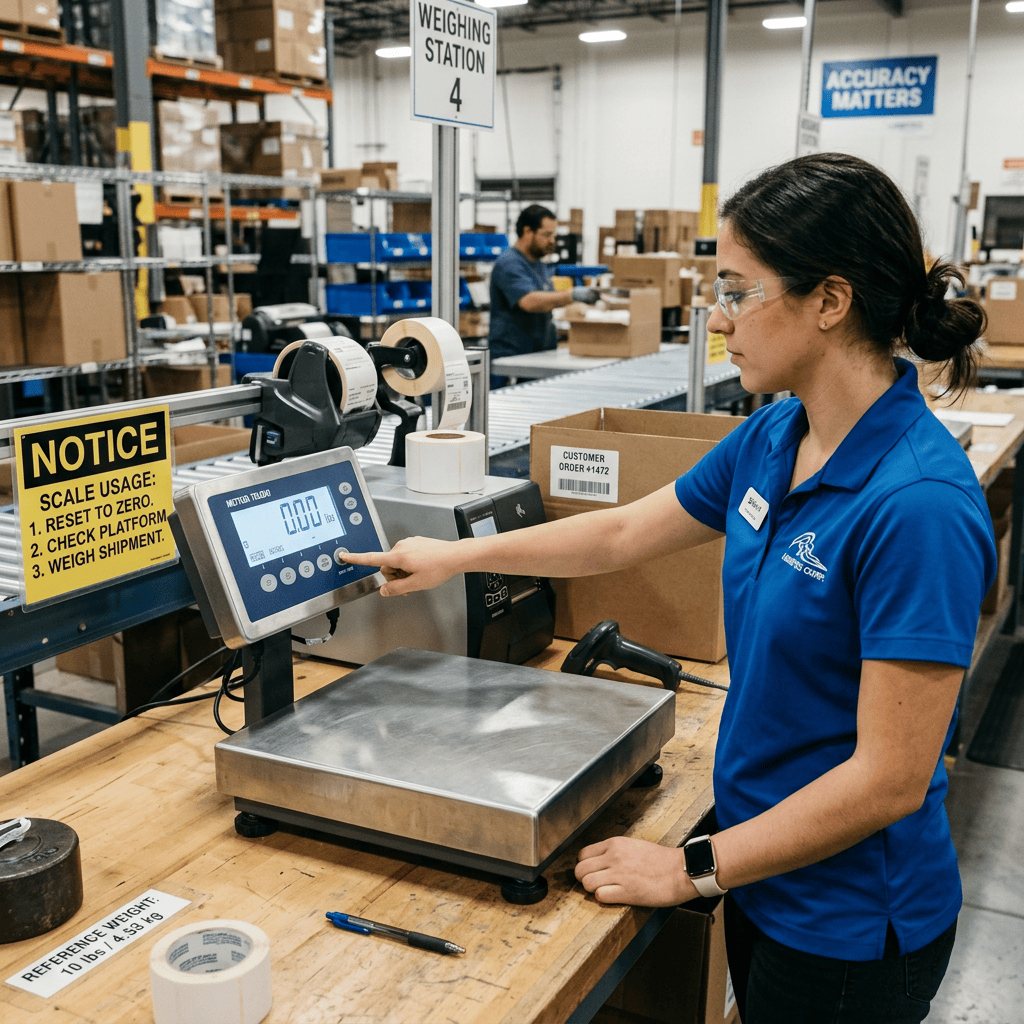
Center the packaged item on a shipping scale and avoid contact with adjacent surfaces or objects. Do not remove the item until the scale readings cease to fluctuate. All components included in shipping (product, packaging material, filler, adhesive, labels, etc.) should be reflected in the final weight.
Before weighing any customer shipments, verify that the shipping scale has been reset to zero. Misaligned or loose labels, open trays or unaccounted tools can cause discrepancies in the scale’s readings. Periodically test the accuracy of your shipping scale using a reference item with a known weight. Prior to shipping any customer orders, resolve any issues that cause inaccuracies prior to weighing them.
Include all dimensions when purchasing your shipping label. Estimating a lower size initially may reduce your initial cost slightly; however, carriers have the ability to adjust your invoice later. More importantly, estimating incorrectly could delay delivery of your package. Accurately listing all dimensions allows your package to flow through the process at the most accurate rate possible.
Should your package seem overpriced, consider utilizing a different type of shipping container rather than removing protective covering. There may exist a significantly sized box or smaller mailer that still protects your product while lowering your size classification. Maintain all necessary protection surrounding your product; saving money is beneficial if the product does not arrive damaged.
Create records of frequently shipped products’ packing sizes and weights. Add this information to a reference manual located in close proximity to where you ship. The next time you need to ship this particular order, refer to the previous size/weight data recorded. Your packer will then know which shipping materials were previously utilized and will merely need to verify their accuracy.
A few minutes of attention spent accurately recording all sides of a completed package and its true weight could potentially eliminate unexpected charges associated with numerous packages. Ensure all finished sides of packages are measured carefully, weigh all components in addition to the products included, and input all factual data correctly. By understanding both size and weight prior to pick up, organizations are able to review options, anticipate costs, and ship orders with increased confidence.

