Measure Twice — Pay Once

Shipping charges are determined by the contents (and sometimes) dimensions and overall weight of the package, not just the items included within. Inaccurate measurements of either the size or weight of the package, whether due to careless measurement or inaccurate scales, can result in additional expense. Properly measuring your order ensures that the appropriate shipping materials are used and that you meet your budget requirements.
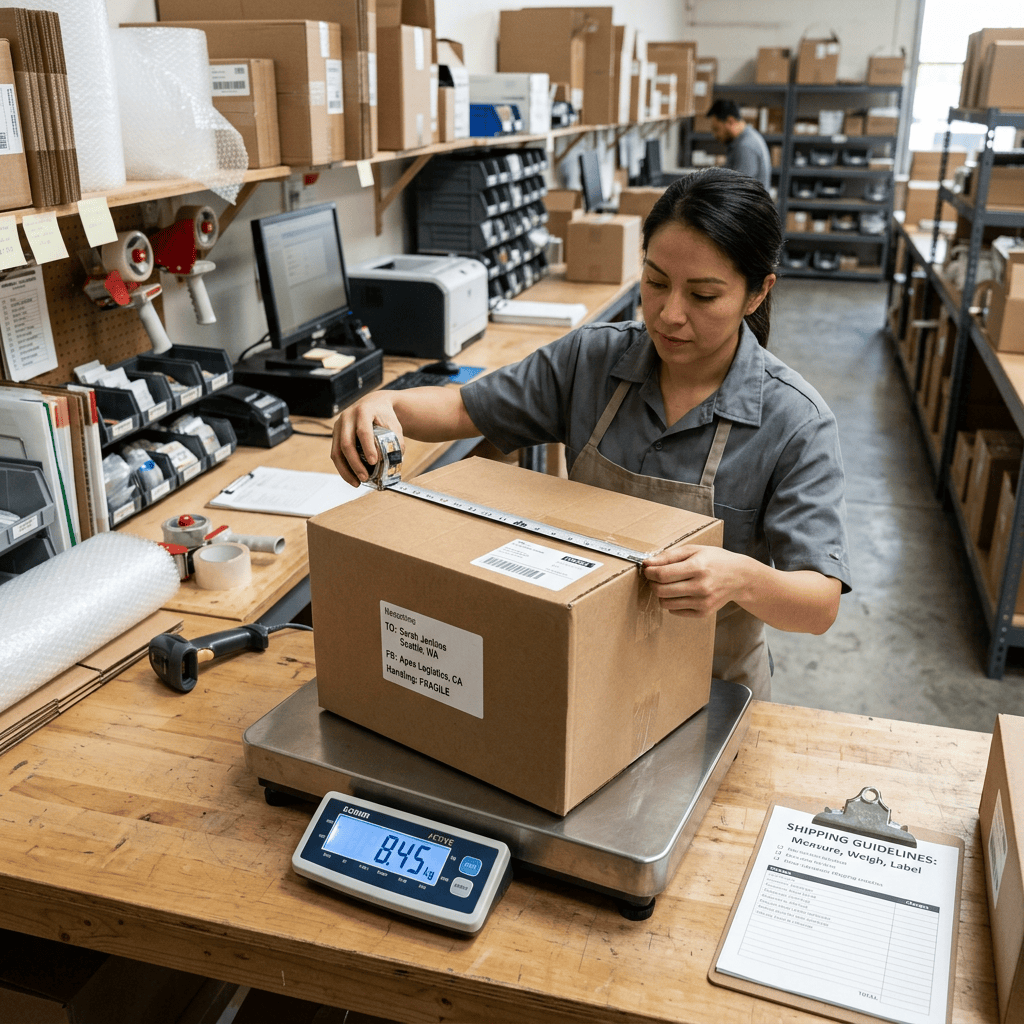
Worker measuring a cardboard shipping box on a digital scale
A warehouse worker measures a boxed shipment before labeling and dispatch.

Take all measurements once the order is packed. Due to content, a box may be larger than it was when empty; similarly, a mailer may have grown thicker with content added. Measure the finished packaging as it will arrive to the destination. Taking this measurement will provide a truer representation of how much room your shipment takes up.

Measure the longest dimension to determine the length. Next, find the widest and tallest dimensions. Be certain to measure to the farthest point of any protruding feature. Record the measurements in the same sequence each time to ensure they do not get entered into the incorrect fields.

Do not compress a soft package to appear smaller. Although some compression may occur upon filling, the mailer typically returns to its original form once released. Take the measurements when resting on the surface of the worktable. If your package is irregularly shaped, record the three largest dimensions (length, width, and height).

Center the packaged item on a shipping scale and avoid contact with adjacent surfaces or objects. Do not remove the item until the scale readings cease to fluctuate. All components included in shipping (product, packaging material, filler, adhesive, labels, etc.) should be reflected in the final weight.

Before weighing any customer shipments, verify that the shipping scale has been reset to zero. Misaligned or loose labels, open trays or unaccounted tools can cause discrepancies in the scale’s readings. Periodically test the accuracy of your shipping scale using a reference item with a known weight. Prior to shipping any customer orders, resolve any issues that cause inaccuracies prior to weighing them.
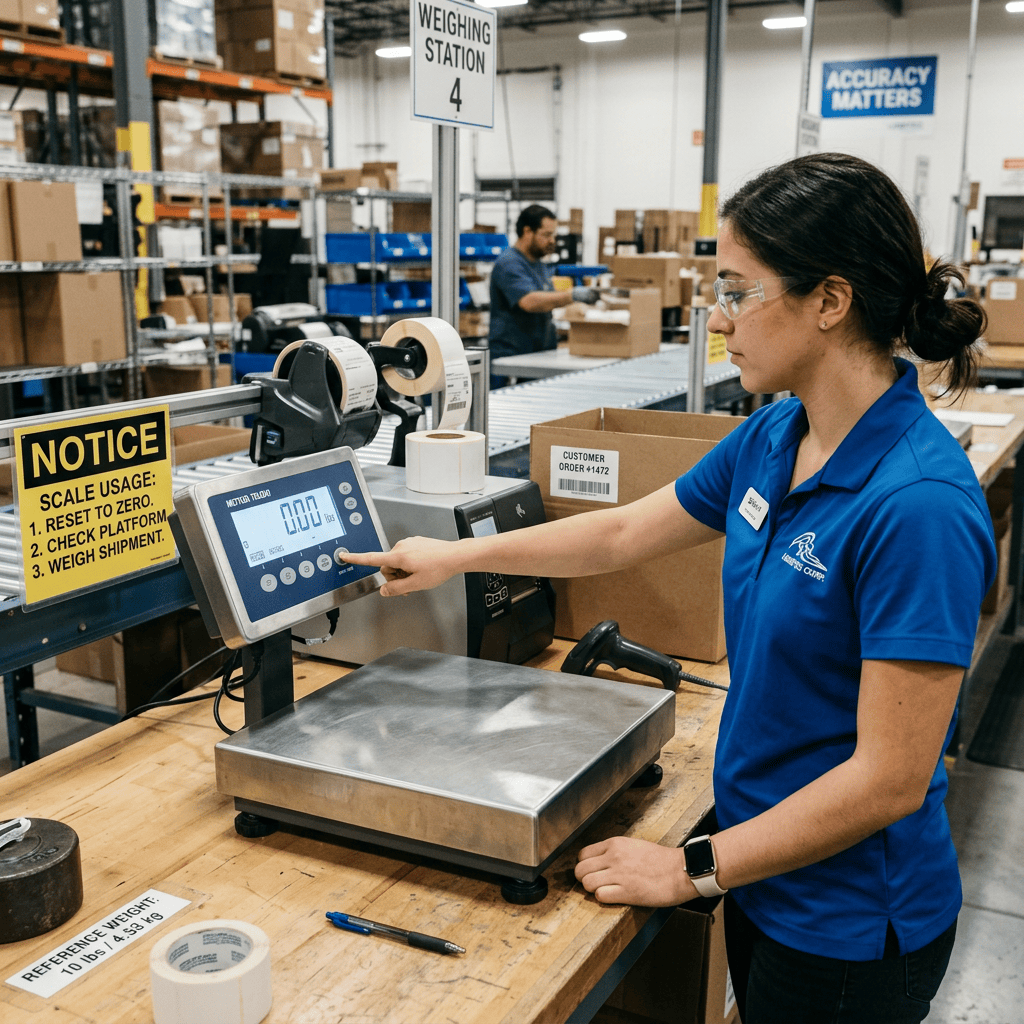
Worker using digital scale at Weighing Station 4; signs read "ACCURACY MATTERS" and "NOTICE SCALE USAGE: 1. RESET TO ZERO. 2. CHECK PLATFORM. 3. WEIGH SHIPMENT."
A warehouse worker checks a shipment scale before labeling a customer order.

Include all dimensions when purchasing your shipping label. Estimating a lower size initially may reduce your initial cost slightly; however, carriers have the ability to adjust your invoice later. More importantly, estimating incorrectly could delay delivery of your package. Accurately listing all dimensions allows your package to flow through the process at the most accurate rate possible.

Should your package seem overpriced, consider utilizing a different type of shipping container rather than removing protective covering. There may exist a significantly sized box or smaller mailer that still protects your product while lowering your size classification. Maintain all necessary protection surrounding your product; saving money is beneficial if the product does not arrive damaged.

Create records of frequently shipped products’ packing sizes and weights. Add this information to a reference manual located in close proximity to where you ship. The next time you need to ship this particular order, refer to the previous size/weight data recorded. Your packer will then know which shipping materials were previously utilized and will merely need to verify their accuracy.

A few minutes of attention spent accurately recording all sides of a completed package and its true weight could potentially eliminate unexpected charges associated with numerous packages. Ensure all finished sides of packages are measured carefully, weigh all components in addition to the products included, and input all factual data correctly. By understanding both size and weight prior to pick up, organizations are able to review options, anticipate costs, and ship orders with increased confidence.
How to Plan Your Next Supply Order

The best way to make sure you never run out of packing material is to have a plan for how much to buy and when. You want enough packing materials to get through the current number of shipments. Too little and you are going to sit around waiting for more to arrive. However, you also don’t want to overbuy. Overbuying means you end up with large quantities of unused supplies taking up valuable space in your warehouse.

One method for planning your next supply purchase is to track usage by your packers during their typical weekly work schedule. Track usage of all major items (boxes by size, rolls of tape, bags, etc.) as well as any items needed for damaged packages or packages needing to be repacked. All these items are taken out of inventory, regardless of whether the customer receives a replacement package.

Be consistent with measuring each item. For example, if you purchase bags by the case, record how many bags each case contains. For tape measure the quantity of rolls and the length of each roll. Two cases could appear identical but contain different quantities. Consistent measurements ensure you don’t under-order supplies.

Next, find out how long it takes for the supplies you ordered to arrive. Factor into this time the processing time of your suppliers plus the time it takes to deliver to your location. While some types of supplies might arrive immediately, others, such as specialty sized boxes, may require weeks or even months for arrival. Be sure to base your purchasing plan on the total lead time so that your shelves do not go bare prior to receiving new stock.

Determine an “order point” for frequently purchased items. An order point is the level at which a particular item has been depleted to the point where the next order should be placed. As an example, let’s say you consume 10 boxes per day and receive new stock every 5 working days. The order point would be 50 boxes, since this allows sufficient stock to meet the wait period for receipt of new stock. Also include a buffer stock allowance to provide additional protection against high volume periods or potential delays in receipt of stock.

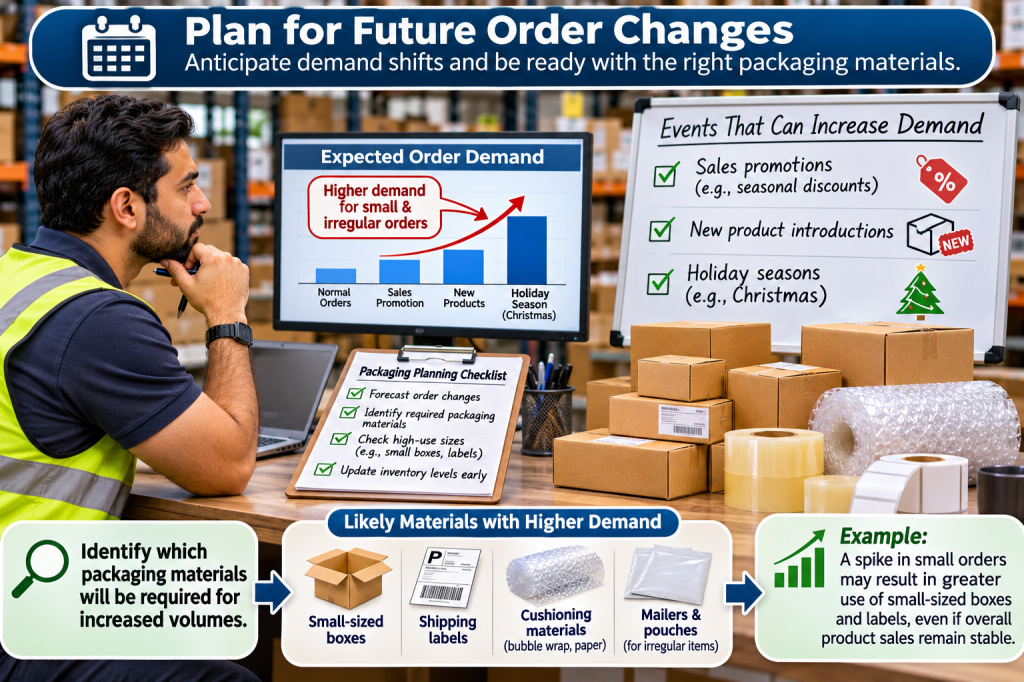
Consider future changes in orders that may create higher demand for specific sizes of packaging materials. During sales promotions, introductions of new products, or holiday seasons such as Christmas, there may be increased demand for smaller or irregularly-sized orders. Identify which packaging materials will be required by these increased volumes. For instance, a spike in small orders may result in greater utilization of small-sized boxes and labels despite overall product sales remaining relatively stable.

Before placing larger orders for packaging materials review your available storage space. Although flat boxes remain compact, they still require dry and open shelf space. Rolls of wrapping paper or plastic film may occupy significantly more area than anticipated due to bulkiness. Take inventory of available space and match the dimensions of the shipment to that available space. Leave adequate aisle space for employees to easily access and count stored inventory.

Finally, before replenishing a low stock status on a non-essential item evaluate its slow-moving status. A box size previously utilized for an older discontinued product may continue to take up precious shelf space. In addition, tying your purchases directly to your current offerings provides flexibility to eliminate excess space for slower selling items and reserve it for packaging materials your employees utilize regularly.