The best way to make sure you never run out of packing material is to have a plan for how much to buy and when. You want enough packing materials to get through the current number of shipments. Too little and you are going to sit around waiting for more to arrive. However, you also don’t want to overbuy. Overbuying means you end up with large quantities of unused supplies taking up valuable space in your warehouse.
One method for planning your next supply purchase is to track usage by your packers during their typical weekly work schedule. Track usage of all major items (boxes by size, rolls of tape, bags, etc.) as well as any items needed for damaged packages or packages needing to be repacked. All these items are taken out of inventory, regardless of whether the customer receives a replacement package.
Be consistent with measuring each item. For example, if you purchase bags by the case, record how many bags each case contains. For tape measure the quantity of rolls and the length of each roll. Two cases could appear identical but contain different quantities. Consistent measurements ensure you don’t under-order supplies.
Next, find out how long it takes for the supplies you ordered to arrive. Factor into this time the processing time of your suppliers plus the time it takes to deliver to your location. While some types of supplies might arrive immediately, others, such as specialty sized boxes, may require weeks or even months for arrival. Be sure to base your purchasing plan on the total lead time so that your shelves do not go bare prior to receiving new stock.
Determine an “order point” for frequently purchased items. An order point is the level at which a particular item has been depleted to the point where the next order should be placed. As an example, let’s say you consume 10 boxes per day and receive new stock every 5 working days. The order point would be 50 boxes, since this allows sufficient stock to meet the wait period for receipt of new stock. Also include a buffer stock allowance to provide additional protection against high volume periods or potential delays in receipt of stock.
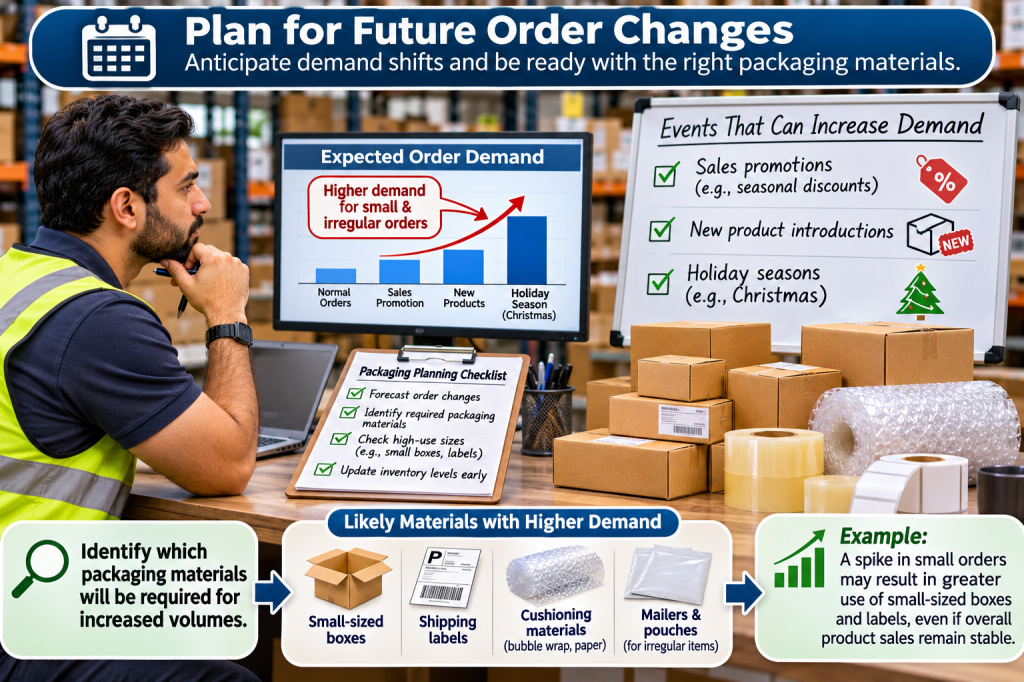
Consider future changes in orders that may create higher demand for specific sizes of packaging materials. During sales promotions, introductions of new products, or holiday seasons such as Christmas, there may be increased demand for smaller or irregularly-sized orders. Identify which packaging materials will be required by these increased volumes. For instance, a spike in small orders may result in greater utilization of small-sized boxes and labels despite overall product sales remaining relatively stable.

Before placing larger orders for packaging materials review your available storage space. Although flat boxes remain compact, they still require dry and open shelf space. Rolls of wrapping paper or plastic film may occupy significantly more area than anticipated due to bulkiness. Take inventory of available space and match the dimensions of the shipment to that available space. Leave adequate aisle space for employees to easily access and count stored inventory.
Finally, before replenishing a low stock status on a non-essential item evaluate its slow-moving status. A box size previously utilized for an older discontinued product may continue to take up precious shelf space. In addition, tying your purchases directly to your current offerings provides flexibility to eliminate excess space for slower selling items and reserve it for packaging materials your employees utilize regularly.